Cheap Flights & Booking Strategies
Cheap flights are usually won before checkout. The travelers who spend less are the ones who compare the full market, understand when prices move, and stay calm when a fare changes. That is why this pillar guide is built around a system rather than a list of myths.
Use this page as the central hub for finding lower fares on leisure trips, especially if you are planning Europe travel or trying to keep summer airfare under control. From here you can jump into deep dives on how to find cheap flights, the best time to book flights for summer travel, and using flight alerts to save money.

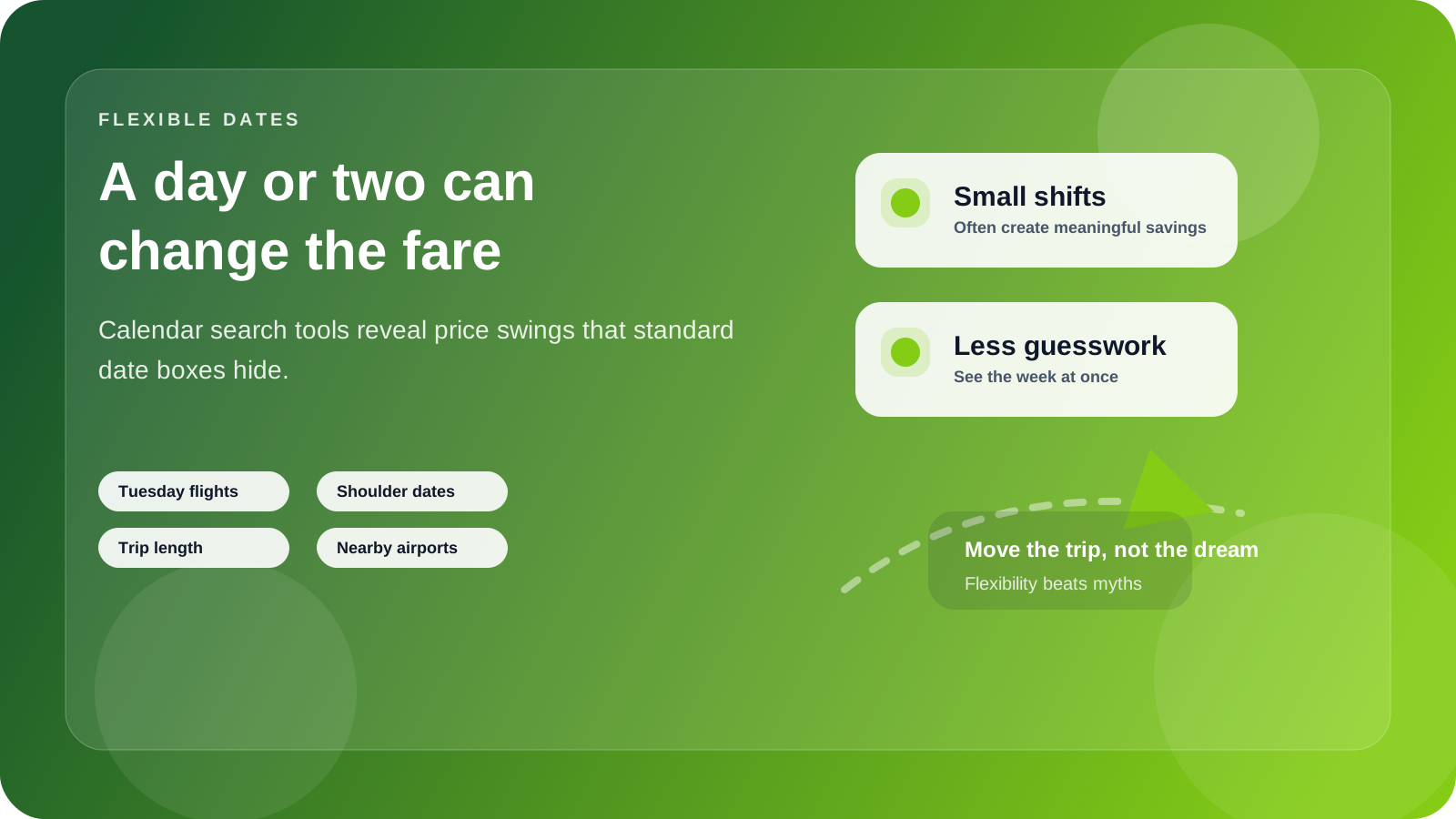
Flight search illustration with nearby airports, alerts, and flexible date tools.
Start with better search habits
Most airfare savings start with the search itself. If you only look at one airport, one exact weekend, and one airline, you are effectively volunteering to pay more. A better starting point is a broad search that compares one-way and roundtrip options, multiple airports, and a wider date range.
That is why flexibility shows up again and again in budget travel. A New York traveler heading to Spain may find Barcelona expensive on a Friday departure but spot a stronger fare to Madrid on Tuesday, then connect onward cheaply. The principle is simple: open the market before you narrow it down.
- Build your search process with How to Find Cheap Flights.
- See why small date shifts matter in How Flexible Dates Save You Money on Flights.

Calendar-style booking graphic focused on summer travel timing.
Timing matters most when demand is obvious
There is no single magic day to buy airfare, but there are clear patterns. Trips with fixed dates, school holidays, and summer beach demand usually reward travelers who start earlier and watch prices before the panic-booking stage. Waiting can work when your trip is open-ended; it tends to hurt when demand is predictable.
That is why booking windows matter more than old internet folklore. A summer trip from Boston to Lisbon has different pricing behavior than a mid-November city break with open dates. You do not need a myth. You need the right booking window for the trip you are actually taking.
- Use the season-specific timing guide in Best Time to Book Flights for Summer Travel.
- Compare waiting versus booking now in Last-Minute Flights vs Advance Booking.

Comparison chart illustrating the trade-off between direct and connecting itineraries.
Cheap fares only count when the whole trip works
A cheaper ticket can unravel fast if it includes an expensive airport transfer, a long overnight layover, or strict bag rules that push the final total above a cleaner itinerary. This is especially common with short-haul Europe flights where the base fare looks excellent until cabin bag rules, seat assignment, and remote airport transfers are added.
You should compare flights the way you compare full trips: airfare, bag policy, arrival time, connection risk, and the cost of getting into town. Sometimes a nonstop is worth paying for. Sometimes a one-stop itinerary is still the smarter buy. Context decides it.
- See the trade-off clearly in Direct vs Connecting Flights.
- Protect the bargain with How to Avoid Hidden Fees When Booking Flights.
Build a repeatable booking routine
The best cheap-flight strategy is boring in a good way. Search broadly, shortlist realistic routes, set alerts, decide your budget ceiling, and book when the overall trip makes sense. That process beats random refreshing because it turns airfare shopping into a set of decisions instead of a guessing game.
It also helps you move quickly when a good fare appears. If you already know your acceptable layover length, your baggage needs, and your travel date range, you can book with confidence instead of talking yourself out of a solid deal while the fare disappears.
-
Search the whole market first, then double-check the airline site if needed.
-
Use flexible dates whenever the trip allows it.
-
Set route alerts instead of checking manually every day.
-
Compare total trip cost, not just the base fare.
-
Book when the itinerary fits your priorities, not when you think a mythical lower fare might appear.
-
Automate the monitoring part with How to Use Flight Alerts to Save Money.
A real-world booking scenario
Imagine a traveler in Boston planning a summer trip to southern Europe. The first search shows an expensive Friday departure into one exact city, so the fare looks discouraging. Then the traveler widens the search, compares Madrid, Lisbon, and Barcelona as entry points, and notices that a Tuesday departure plus a slightly different return pattern opens a much more reasonable fare without changing the spirit of the trip.
That is how cheap-flight strategy usually works in practice. The savings rarely come from a magic trick. They come from changing the structure of the decision just enough that the market starts working in your favor instead of against you.
Mistakes that make airfare harder than it needs to be
The most common overpayment pattern is not bad luck. It is overconfidence in a narrow search: one airport, one exact weekend, and too much faith that the market will suddenly rescue the trip later. Travelers also get themselves in trouble when they judge a fare by the headline number instead of the total cost and final schedule.
Another mistake is waiting without a plan. If you are not using alerts, date flexibility, or a real budget threshold, then “waiting” usually means losing control of the decision rather than improving it.
- Searching one exact route before checking nearby alternatives.
- Ignoring bag rules or airport-transfer costs until after the fare looks attractive.
- Treating a cheap base fare as the same thing as a cheap trip.
- Waiting for a perfect deal instead of booking a good itinerary at the right moment.
A simple action plan you can reuse
If you want more predictable airfare outcomes, use this sequence every time. Start broad, decide what kind of itinerary is acceptable, monitor it properly, and book when the trip reaches your comfort zone. That rhythm is what turns isolated tips into a system.
It also keeps you from burning time on low-signal behavior. Instead of checking fares emotionally, you are making deliberate decisions at the points where they actually matter.
- Compare several airport and date combinations before narrowing the trip.
- Set alerts if you are not ready to book immediately.
- Decide your price ceiling and your acceptable trade-offs in advance.
- Book once the itinerary fits the trip you actually want to take.
Questions to ask before you book
Before you click purchase, pause long enough to ask whether the itinerary still works once the excitement of a lower fare fades. Are the dates still good for the trip? Is the airport convenient enough? Are the bags, layovers, and arrival time acceptable? Those questions protect you from buying a technically cheap ticket that feels expensive once you actually travel.
This final pause is useful because cheap-flight strategy is not only about finding a low number. It is about matching price to a trip you will still be happy to take when travel day arrives.
- Would I still choose this itinerary if the fare were only slightly higher?
- Does the airport and arrival time still support the trip I want?
- Have I priced the bags, transfers, and connection risk honestly?
- Is this a good fare for my route, not just a low fare in isolation?
How to use this pillar without getting overwhelmed
A pillar page is most useful when you treat it like a map rather than something to read once and forget. Start with the article that solves your immediate decision, then use the related guides to tighten the rest of the trip. If your biggest problem is airfare, begin there. If it is Europe routing, start there. If it is trip-day stress and hidden costs, move into the planning guides.
That sequencing matters because strong travel decisions stack. Better flight timing helps your city choices. Better city choices reduce spending pressure. Better packing and airport planning protect the savings you created earlier.
- Use one guide to solve the immediate problem in front of you.
- Follow the internal links to strengthen the next decision, not all decisions at once.
- Come back to the pillar when the trip changes or the route narrows.
- Treat the cluster as a workflow, not a pile of disconnected blog posts.
Related reading
-
Start with How to Find Cheap Flights for the core search routine.
-
Pair it with Best Time to Book Flights for Summer Travel if your dates are tied to peak season.
-
Use How Flexible Dates Save You Money on Flights and How to Use Flight Alerts to Save Money to keep your search efficient.
FAQ
What matters most when you are trying to book cheap flights?
The biggest levers are flexible dates, realistic booking timing, nearby airport checks, and paying attention to the total trip cost instead of the lowest headline fare.
Do cheap flights come from one secret trick?
No. Consistent savings come from a repeatable process, not one hack. Good travelers compare options, set alerts, and book when the overall trip cost fits their budget.
Should I always choose the cheapest itinerary?
Not automatically. A fare is only a bargain if baggage rules, arrival time, transfer risk, and airport location still make the trip worth taking.
Cheap flights are less about luck than discipline. Once you understand flexibility, timing, connections, and fee control, you can book with a lot more confidence and a lot less wasted money.
Related routes and guides
Use this advice on a real route
The practical test is not which fare looks lowest first. It is which route still works after baggage, transfers, and schedule quality are included.
Route guide
Lisbon to Barcelona
Use this route page to compare airport fit, baggage costs, timing, and the prefilled search for LIS to BCN.
Route guide
Lisbon to Madrid
Use this route page to compare airport fit, baggage costs, timing, and the prefilled search for LIS to MAD.
Route guide
Madrid to Barcelona
Use this route page to compare airport fit, baggage costs, timing, and the prefilled search for MAD to BCN.
Destination guide
Barcelona
Check the arrival-airport context, route links, and destination fit before treating the lowest fare as the best value.