
How to Find Cheap Flights (Without Sketchy Tricks)
Finding cheap flights is less about secret hacks and more about seeing the market clearly. Airlines price tickets dynamically, so the travelers who save the most are the ones who compare options, stay flexible where they can, and understand which costs actually matter.
If you want the complete framework, start with the Cheap Flights & Booking Strategies pillar. Then use this guide as the day-to-day playbook for actually finding lower fares without wasting hours.

Calendar comparison image showing how small date shifts can lower fares.
Start broad before you get specific
The first mistake most travelers make is searching too narrowly. If you only look at one airport pair on one exact weekend, the airline has no reason to show you much flexibility. Start with the full market first, then narrow based on what the prices are telling you.
That means checking nearby airports, comparing one-way versus roundtrip tickets, and searching destination regions when you are open-minded. A traveler from Chicago might discover that Milan prices better than Venice, or that flying to Lisbon creates a cheaper route into southern Europe than insisting on a smaller final destination.
Use flexible dates the way airlines use inventory
Fare calendars matter because airlines do not price every day the same way. Midweek departures, shorter trips, and dates just outside the most obvious demand peak can all change the fare meaningfully. Even a shift from Friday departure to Tuesday can reset the market on popular leisure routes.
This is especially important for Europe travel in summer. If you search only Saturday to Saturday, you will often see the most expensive version of the trip. Search the full week first, note where the dips appear, then decide whether those dates still work for your plans.

Phone-style fare alert illustration for route monitoring and price-drop notifications.
Set alerts instead of refreshing every day
Good fare alerts save both time and money. Instead of checking the same route over and over, set route alerts for the city pair and date range you care about, then let the price movement come to you. This works particularly well for trips you know you want to take but do not need to buy immediately.
Alerts also help you stay objective. When a Boston to Lisbon or New York to Barcelona route drops into your comfort zone, you can react quickly because the decision was already made in advance. You are not trying to invent a budget ceiling in the middle of a booking session.
Check the total trip cost, not the first fare you see
A cheap base fare is only useful if the whole itinerary still makes sense. Budget carriers, self-connections, and ultra-cheap tickets can become mediocre deals if they require extra bags, a costly airport transfer, or a brutal arrival time that forces you into more hotel spending.
A practical cheap-flight search always asks one extra question: what will this trip really cost me? That means baggage, airport transfer, travel insurance needs, and the value of your time. Sometimes the second-cheapest ticket is the better buy because it protects the rest of the budget.
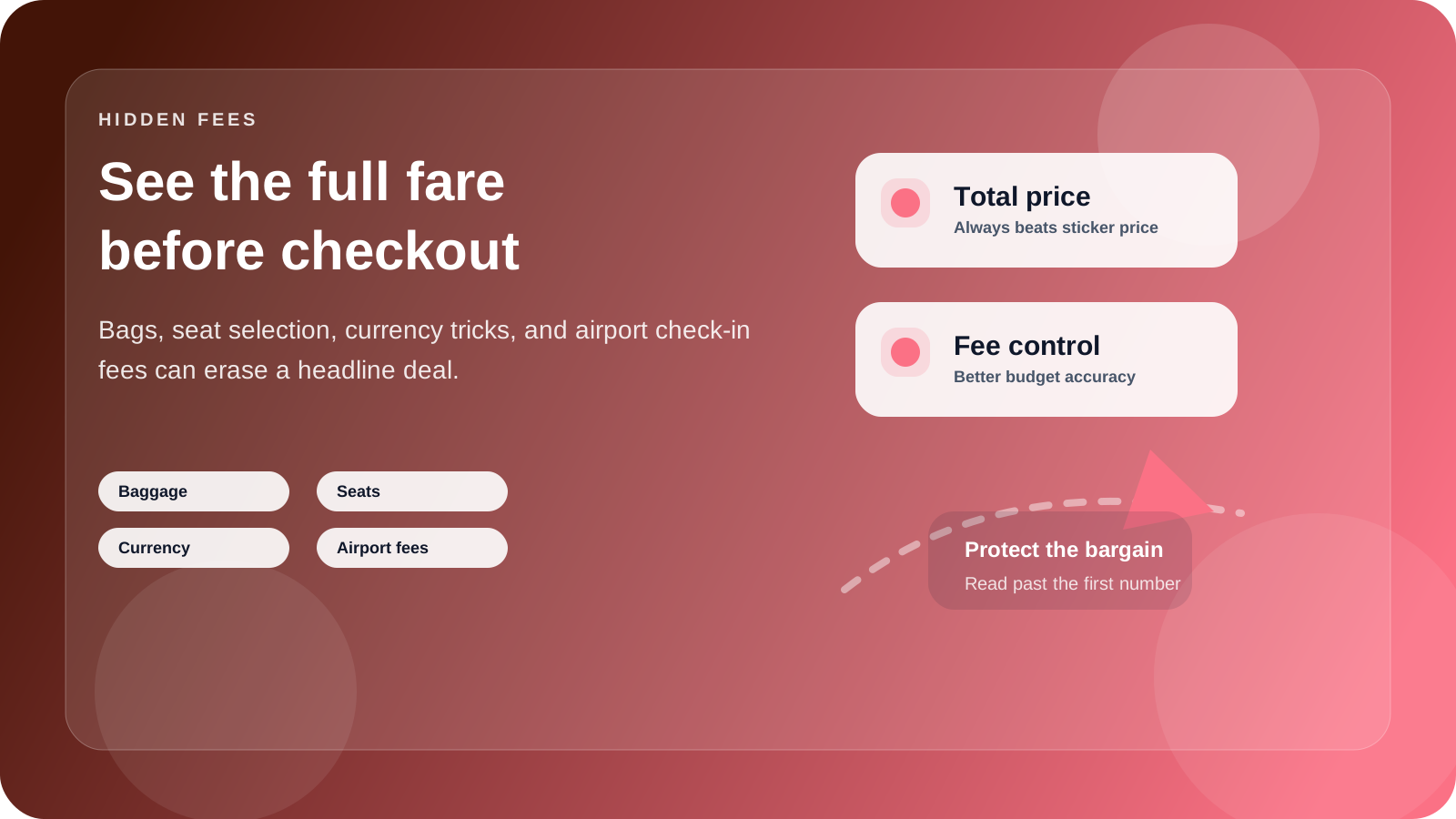
Fare breakdown image showing how fees can change a cheap-flight decision.
Build a simple booking routine you can repeat
The travelers who consistently pay less usually follow the same sequence every time. They search broadly, compare dates, set alerts, shortlist realistic options, and book when the itinerary fits their price ceiling. That repeatable process beats myth-chasing because it works on many routes, not just one lucky fare.
Once you do this a few times, cheap flights stop feeling random. You start seeing patterns: which airports are good entry points, which routes punish fixed weekends, and when a fare is genuinely solid for the kind of trip you are planning.
- Check nearby airports before you commit to a route.
- Use a calendar view whenever your dates are even slightly flexible.
- Set an alert if you are not ready to book yet.
- Compare bags and transfer costs before you call a fare cheap.
- Book when the trip fits your budget and schedule, not because you hope a mythical lower price will appear.
A real-world booking scenario
Imagine a traveler in Boston planning a summer trip to southern Europe. The first search shows an expensive Friday departure into one exact city, so the fare looks discouraging. Then the traveler widens the search, compares Madrid, Lisbon, and Barcelona as entry points, and notices that a Tuesday departure plus a slightly different return pattern opens a much more reasonable fare without changing the spirit of the trip.
That is how cheap-flight strategy usually works in practice. The savings rarely come from a magic trick. They come from changing the structure of the decision just enough that the market starts working in your favor instead of against you.
Mistakes that make airfare harder than it needs to be
The most common overpayment pattern is not bad luck. It is overconfidence in a narrow search: one airport, one exact weekend, and too much faith that the market will suddenly rescue the trip later. Travelers also get themselves in trouble when they judge a fare by the headline number instead of the total cost and final schedule.
Another mistake is waiting without a plan. If you are not using alerts, date flexibility, or a real budget threshold, then “waiting” usually means losing control of the decision rather than improving it.
- Searching one exact route before checking nearby alternatives.
- Ignoring bag rules or airport-transfer costs until after the fare looks attractive.
- Treating a cheap base fare as the same thing as a cheap trip.
- Waiting for a perfect deal instead of booking a good itinerary at the right moment.
A simple action plan you can reuse
If you want more predictable airfare outcomes, use this sequence every time. Start broad, decide what kind of itinerary is acceptable, monitor it properly, and book when the trip reaches your comfort zone. That rhythm is what turns isolated tips into a system.
It also keeps you from burning time on low-signal behavior. Instead of checking fares emotionally, you are making deliberate decisions at the points where they actually matter.
- Compare several airport and date combinations before narrowing the trip.
- Set alerts if you are not ready to book immediately.
- Decide your price ceiling and your acceptable trade-offs in advance.
- Book once the itinerary fits the trip you actually want to take.
Questions to ask before you book
Before you click purchase, pause long enough to ask whether the itinerary still works once the excitement of a lower fare fades. Are the dates still good for the trip? Is the airport convenient enough? Are the bags, layovers, and arrival time acceptable? Those questions protect you from buying a technically cheap ticket that feels expensive once you actually travel.
This final pause is useful because cheap-flight strategy is not only about finding a low number. It is about matching price to a trip you will still be happy to take when travel day arrives.
- Would I still choose this itinerary if the fare were only slightly higher?
- Does the airport and arrival time still support the trip I want?
- Have I priced the bags, transfers, and connection risk honestly?
- Is this a good fare for my route, not just a low fare in isolation?
Related reading
-
Dial in your timing with Best Time to Book Flights for Summer Travel.
-
Use How Flexible Dates Save You Money on Flights to get more from the search process.
-
Automate your watchlist with How to Use Flight Alerts to Save Money.
FAQ
Is there a cheapest day to book flights?
Not in a reliable one-size-fits-all way. What matters more is your route, season, and how much flexibility you have on travel dates.
Do flights get cheaper at night?
There is no dependable night-time discount rule. Prices move because of demand, inventory, and competition, not because the clock hit a certain hour.
Should I book directly with the airline after I compare fares?
Often yes, especially if the price is similar. Direct booking can make schedule changes, bag questions, and disruptions easier to manage.
Cheap flights come from strategy, not luck. Once you search broadly, stay flexible, and compare the total trip cost, the money-saving part becomes much more predictable.
Related routes and guides
Use this advice on a real route
Airline rankings, economy tips, and booking tactics only become useful once you compare the fare family, airport transfer, and route timing together.
Route guide
Lisbon to Barcelona
Use this route page to compare airport fit, baggage costs, timing, and the prefilled search for LIS to BCN.
Route guide
Lisbon to Milan
Use this route page to compare airport fit, baggage costs, timing, and the prefilled search for LIS to MXP.
Route guide
Lisbon to Nice
Use this route page to compare airport fit, baggage costs, timing, and the prefilled search for LIS to NCE.
Destination guide
New York
Check the arrival-airport context, route links, and destination fit before treating the lowest fare as the best value.