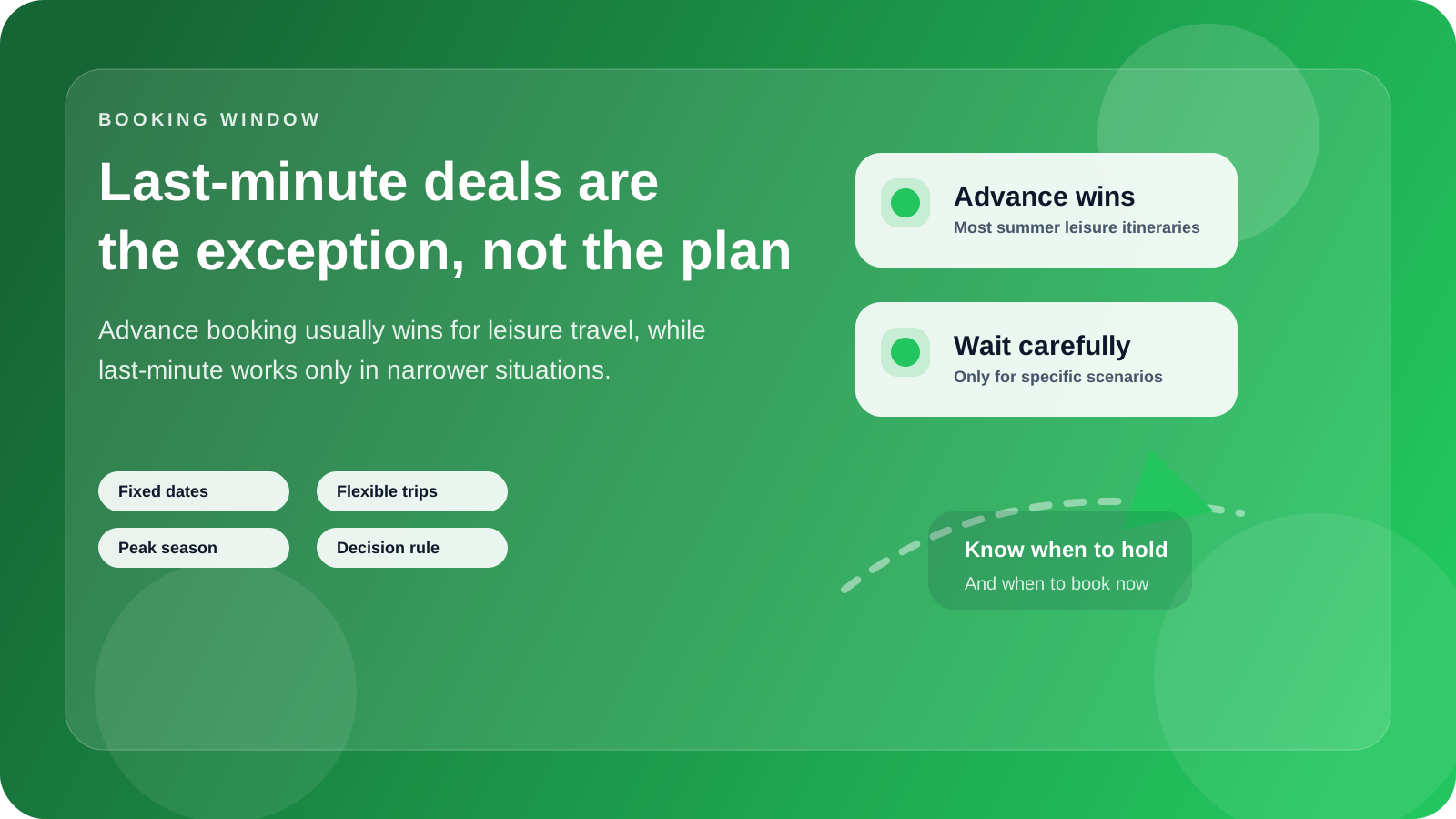
Last-Minute Flights vs Advance Booking
The idea of a dramatic last-minute deal is appealing because it feels cinematic. In reality, most leisure travelers do better with advance booking, especially when dates are fixed and the route is in obvious demand.
This guide belongs with Best Time to Book Flights for Summer Travel and the Cheap Flights & Booking Strategies hub, because the best answer depends on the trip you are actually taking.
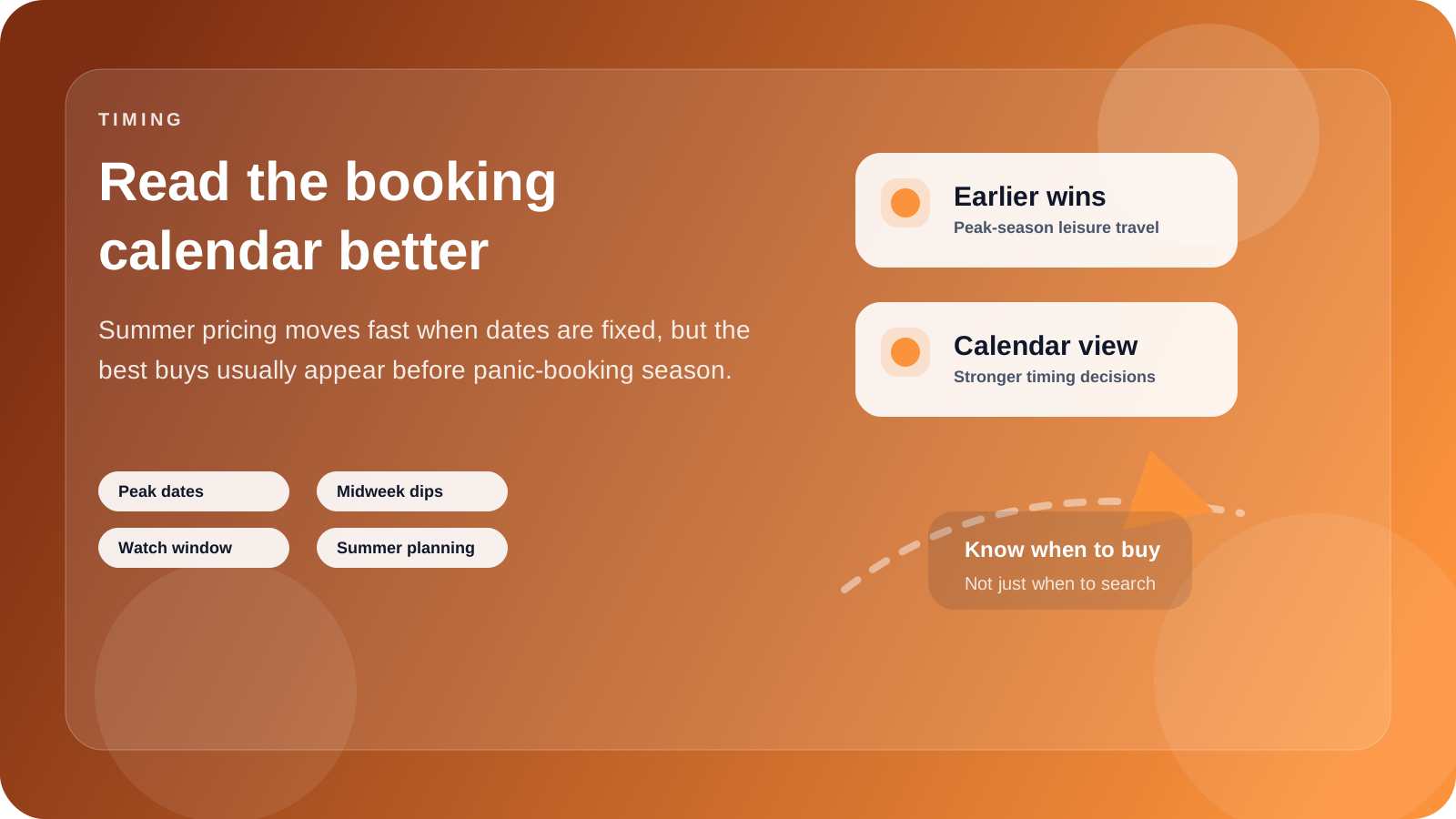
Calendar heatmap image reinforcing earlier planning for high-demand routes.
Advance booking wins on predictable leisure demand
If the trip is a summer holiday, school-break getaway, wedding, or long weekend in a popular city, advance booking usually wins because the market already knows people want those seats. As departure gets closer, the best combinations of price and schedule tend to disappear.
This does not mean booking absurdly early without comparison. It means giving yourself enough time to monitor and act before the route becomes rigidly expensive.
Last-minute works only when the trip itself is flexible
Waiting can still work if your destination is open, your dates are broad, and you are happy to follow the market rather than force a specific plan. In that scenario, you are not really betting on one route dropping. You are giving yourself permission to take whichever route becomes attractive.
That is a very different traveler from someone who needs New York to Athens on a specific Friday in July.
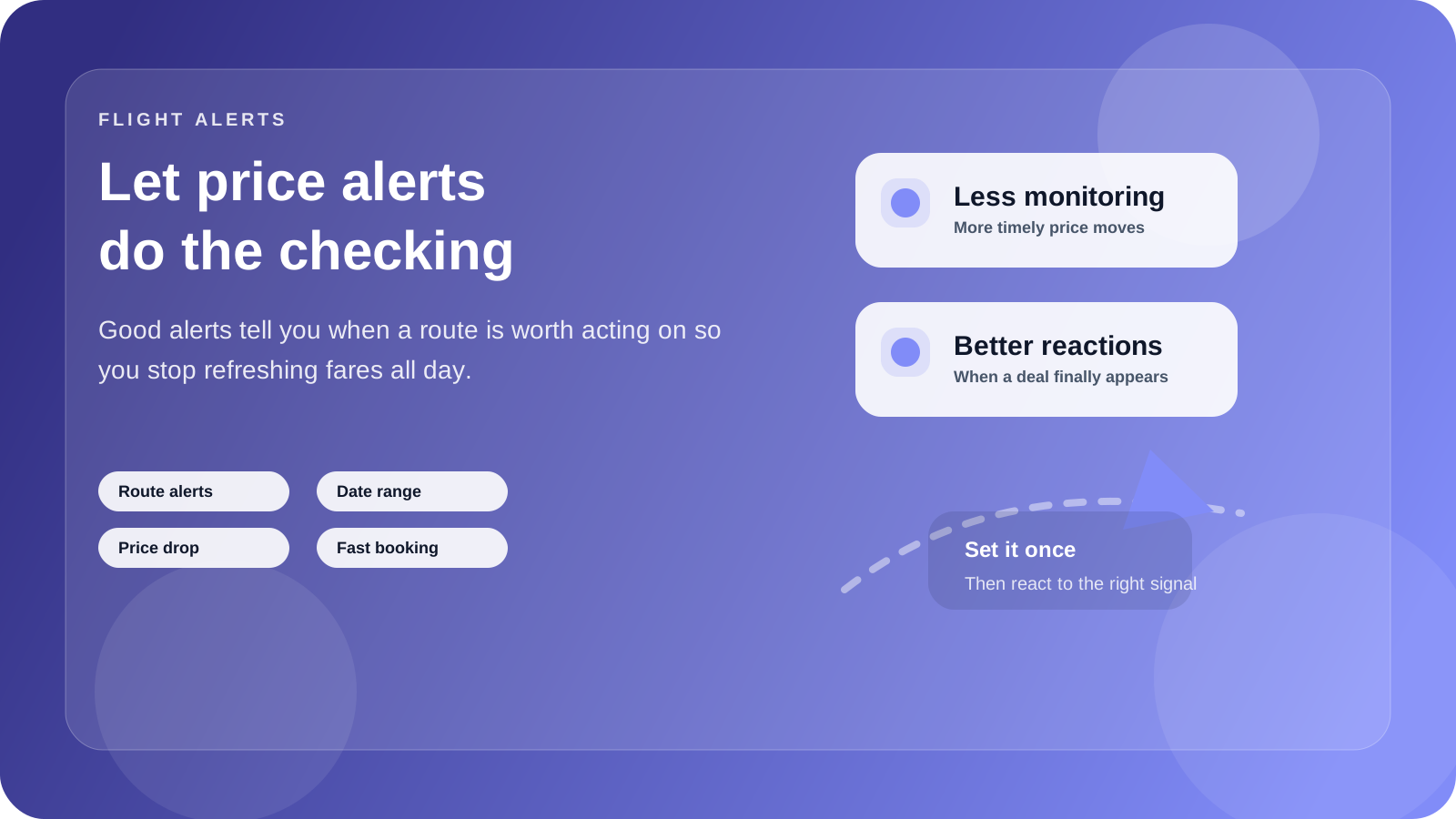
Alert dashboard image for tracking price movement before a booking decision.
Alerts help you wait intelligently, not blindly
If you are going to wait, use alerts. That way you are monitoring the route with purpose rather than refreshing fares and hoping. Alerts can show whether the market is stable, worsening, or occasionally presenting bookable opportunities.
Without that structure, “waiting” often becomes procrastination dressed up as strategy.
Trip length and route type change the answer
A short city break is less tolerant of last-minute chaos because you have fewer ways to absorb bad timing or expensive schedules. A longer open-ended trip can be more flexible, especially if you are willing to adjust the destination based on what the market gives you.
The more specific the trip, the less useful last-minute thinking usually becomes.

Comparison image supporting scenario-based booking decisions.
Use a simple decision rule
If the destination is fixed, the dates matter, and the season is busy, book in advance once the fare is acceptable. If the destination is flexible, the dates are broad, and you are genuinely willing to pivot, waiting can be reasonable for longer.
That rule is not romantic, but it is reliable.
- Book earlier for fixed-date leisure trips and peak seasons.
- Wait only if the trip is flexible enough to follow the market.
- Use alerts if you plan to wait.
- Do not confuse indecision with strategy.
A real-world booking scenario
Imagine a traveler in Boston planning a summer trip to southern Europe. The first search shows an expensive Friday departure into one exact city, so the fare looks discouraging. Then the traveler widens the search, compares Madrid, Lisbon, and Barcelona as entry points, and notices that a Tuesday departure plus a slightly different return pattern opens a much more reasonable fare without changing the spirit of the trip.
That is how cheap-flight strategy usually works in practice. The savings rarely come from a magic trick. They come from changing the structure of the decision just enough that the market starts working in your favor instead of against you.
Mistakes that make airfare harder than it needs to be
The most common overpayment pattern is not bad luck. It is overconfidence in a narrow search: one airport, one exact weekend, and too much faith that the market will suddenly rescue the trip later. Travelers also get themselves in trouble when they judge a fare by the headline number instead of the total cost and final schedule.
Another mistake is waiting without a plan. If you are not using alerts, date flexibility, or a real budget threshold, then “waiting” usually means losing control of the decision rather than improving it.
- Searching one exact route before checking nearby alternatives.
- Ignoring bag rules or airport-transfer costs until after the fare looks attractive.
- Treating a cheap base fare as the same thing as a cheap trip.
- Waiting for a perfect deal instead of booking a good itinerary at the right moment.
A simple action plan you can reuse
If you want more predictable airfare outcomes, use this sequence every time. Start broad, decide what kind of itinerary is acceptable, monitor it properly, and book when the trip reaches your comfort zone. That rhythm is what turns isolated tips into a system.
It also keeps you from burning time on low-signal behavior. Instead of checking fares emotionally, you are making deliberate decisions at the points where they actually matter.
- Compare several airport and date combinations before narrowing the trip.
- Set alerts if you are not ready to book immediately.
- Decide your price ceiling and your acceptable trade-offs in advance.
- Book once the itinerary fits the trip you actually want to take.
Questions to ask before you book
Before you click purchase, pause long enough to ask whether the itinerary still works once the excitement of a lower fare fades. Are the dates still good for the trip? Is the airport convenient enough? Are the bags, layovers, and arrival time acceptable? Those questions protect you from buying a technically cheap ticket that feels expensive once you actually travel.
This final pause is useful because cheap-flight strategy is not only about finding a low number. It is about matching price to a trip you will still be happy to take when travel day arrives.
- Would I still choose this itinerary if the fare were only slightly higher?
- Does the airport and arrival time still support the trip I want?
- Have I priced the bags, transfers, and connection risk honestly?
- Is this a good fare for my route, not just a low fare in isolation?
Related reading
-
Start with Best Time to Book Flights for Summer Travel for peak-season timing.
-
If you wait, use How to Use Flight Alerts to Save Money to do it intelligently.
-
Compare itinerary trade-offs with Direct vs Connecting Flights.
FAQ
Are last-minute flights usually cheaper?
Usually not for leisure travel, especially on popular routes and peak-season dates. Last-minute bargains are more exception than rule.
When can waiting still make sense?
Waiting can make sense when your dates, destination, and even trip length are flexible enough that you can act on whatever good route appears.
Why does advance booking usually win?
Because leisure demand becomes more constrained as departure gets closer, which leaves travelers with fewer good schedules and less pricing flexibility.
Last-minute flights can work, but they are not the default path to cheap travel. For most leisure trips, advance booking wins because it preserves choice and protects you from obvious demand spikes.
Related routes and guides
Use this advice on a real route
Use the guide as a decision filter: compare the base fare, bags, seat choice, airport access, and travel time before calling a ticket cheap.
Destination guide
New York
Check the arrival-airport context, route links, and destination fit before treating the lowest fare as the best value.
Destination guide
Paris
Check the arrival-airport context, route links, and destination fit before treating the lowest fare as the best value.
Search shortcut
Browse route guides with prefilled searches
Move from advice to a route page where airport codes, fare context, and the search form are already aligned.