How Early Should You Arrive at the Airport
Airport timing is one of those travel questions people want a universal answer to. The truth is simpler and more useful: how early you should arrive depends on the ticket, the airport, your baggage, and how much risk is built into the itinerary.
This guide belongs in the Travel Hacks & Trip Planning hub because good airport timing is really about removing avoidable stress and avoiding expensive mistakes.
Packing image supporting faster and simpler airport processing.
There is no one right airport rule
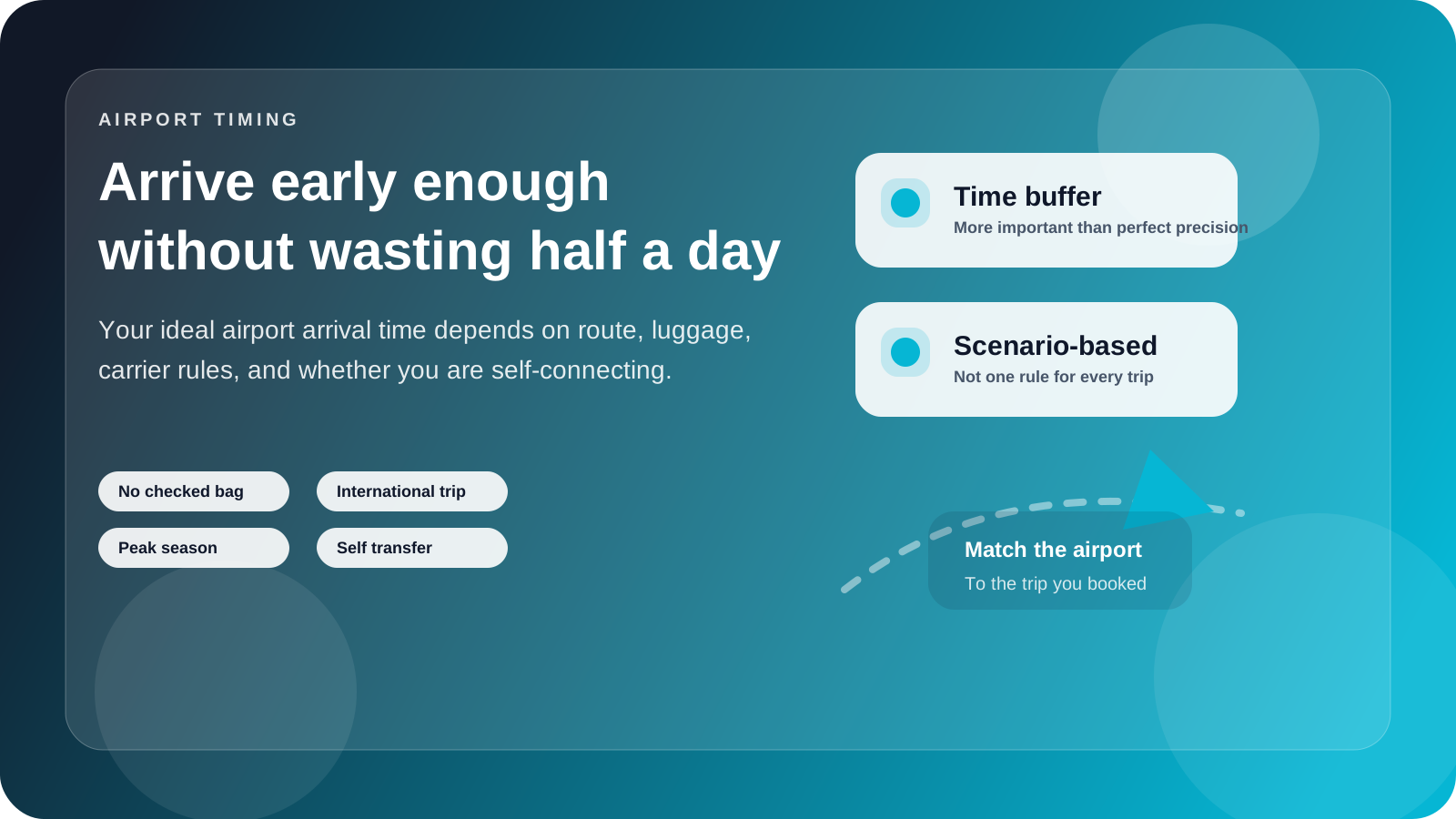
A short domestic flight with no checked bag does not behave like a long-haul international departure. Neither should your arrival plan. The right buffer depends on complexity: baggage, unfamiliar airports, peak periods, family travel, and whether anything in the itinerary is fragile.
That is why airport advice should be scenario-based. A useful answer is not “always three hours.” It is “give yourself enough buffer for this specific trip.”
Bag drops and airline rules change the calculation
The moment checked baggage enters the picture, your airport timing needs more margin. Budget airlines also deserve more caution because bag measurement, check-in deadlines, and boarding procedures can be less forgiving than travelers expect.
If your ticket has strict rules, build around them. Missing a cutoff because you assumed the airport would be quick is an expensive form of optimism.

Summer airport scene image emphasizing longer queues and travel-day friction.
International trips and self-connections need more buffer
International departures usually deserve extra time because document checks, larger security flows, and more complicated terminals all increase uncertainty. Self-connected itineraries deserve even more caution because a delay on one leg can create real downstream risk.
If your itinerary depends on everything going perfectly, your airport arrival time should not be aggressive.
Summer and holiday periods change the mood of the airport
Peak travel periods create more queues, more family groups, and more general friction. Even when the formal airport recommendation does not change, the lived experience often does. That makes a slightly earlier arrival sensible, especially if you are traveling at popular times of day.
In short: do not treat an August airport the same way you treat a sleepy mid-November weekday departure.

Flight comparison image supporting scenario-based airport timing decisions.
Use a risk-based timing rule
If the trip is simple, the buffer can be smaller. If the trip is complex, the buffer should grow. This risk-based rule is more useful than memorizing a single number because it adapts to the actual shape of your journey.
Good airport timing is not about killing hours in a terminal. It is about preventing the kind of rushed mistake that ruins a cheap trip.
- Add more time for checked bags, strict carriers, and unfamiliar airports.
- Add more time in peak summer and holiday periods.
- Protect self-connections with generous buffer.
- Use lighter packing to keep the airport process simpler.
How this advice plays out on the trip itself
Imagine a traveler taking a four-night break on a low-cost airline. Because the bag is packed to the ticket rules, airport timing is realistic, and add-ons are chosen intentionally, the whole trip starts calmer and cheaper. None of those choices are dramatic on their own, but together they stop the budget from leaking away.
That is the pattern behind most useful travel hacks. They do not look flashy. They simply remove the avoidable friction that turns a good itinerary into an unnecessarily expensive one.
Mistakes that create avoidable travel-day stress
Practical travel problems tend to come from rushing. Travelers overpack, skip reading the ticket rules, arrive at the airport with too little buffer, or buy add-ons without deciding whether they actually help. Those choices make the trip feel more chaotic than it needs to be.
The better habit is to simplify before departure. When your bag, airport plan, and checkout decisions all line up, the entire trip becomes easier to carry and easier to budget.
- Packing for every possible scenario instead of the actual trip.
- Ignoring the airline’s baggage and check-in rules.
- Treating airport timing as a fixed myth instead of a trip-specific choice.
- Letting convenience purchases replace simple planning.
A practical plan for a smoother trip
The easiest way to use travel-hack advice is to reduce decisions on travel day. Make the packing list before you pack, read the ticket rules before checkout, and decide your airport timing before you leave home. That way the trip runs on decisions you already made clearly, not on rushed guesses.
This does not just save money. It preserves energy, which is often the more valuable thing on a short trip or a busy peak-season route.
- Match your bag to the fare before you book.
- Remove extras that do not solve a real problem.
- Build a realistic airport buffer for the trip you are taking.
- Keep the plan simple enough that you can actually enjoy the destination.
Questions to ask before travel day
Practical planning improves when you ask a few calm questions before the trip starts. Does your bag really fit the ticket rules? Do you know what the airline expects at the airport? Have you left enough buffer for the schedule you actually booked? These checks are small, but they often make the difference between a smooth start and a stressful one.
That is also why practical travel advice pays off so reliably. It gives you a way to catch avoidable friction while the fix is still easy and cheap.
- Does my bag setup match the ticket, not just my preference?
- Do I know where small fees or timing problems could appear?
- Have I made the airport plan for this exact trip, not a generic one?
- Will this travel setup still feel manageable if the day gets a little messy?
Why travel-day simplicity matters so much
Many budget trips are won or lost on the day of departure. A bag that is easy to manage, a realistic airport plan, and a clear sense of what the airline expects can protect the whole trip from small avoidable setbacks. That is especially true in busy summer periods, on low-cost carriers, or on short trips where one mistake eats a large share of the experience.
Simple travel-day systems are valuable because they hold up even when the day gets a little messy. A longer queue, a delayed train to the airport, or a crowded gate area feels much less dramatic when you have already reduced the amount of chaos you are carrying into the trip.
- Aim for less friction, not just less spending.
- Give yourself enough buffer that one small delay does not ruin the day.
- Keep the essentials easy to reach and the plan easy to follow.
- Remember that a smoother departure usually feels like better value too.
Related reading
-
Speed up the process with Budget Travel Packing List.
-
Handle peak season better with Summer Travel Hacks Most People Don't Know.
-
Avoid airline-rule surprises with How to Avoid Hidden Fees When Booking Flights.
FAQ
How early should I arrive for a domestic flight with no checked bag?
If the airport is familiar and the airline is straightforward, you can usually use a shorter buffer than you would for an international trip, but you still need enough time for security and any unexpected queue.
Should I arrive earlier in summer or holidays?
Yes. Peak travel periods create more pressure at check-in, security, and boarding, so extra buffer is usually sensible.
Do budget airlines require more airport time?
Often yes, especially when bag rules are strict, airport check-in has deadlines, or the carrier uses secondary airports with longer processing surprises.
The right airport arrival time is the one that respects the complexity of your trip. Build buffer where the risk is real, and you will almost always make better travel-day decisions.
Related routes and guides
Use this advice on a real route
Airline rankings, economy tips, and booking tactics only become useful once you compare the fare family, airport transfer, and route timing together.
Destination guide
Paris
Check the arrival-airport context, route links, and destination fit before treating the lowest fare as the best value.
Search shortcut
Browse route guides with prefilled searches
Move from advice to a route page where airport codes, fare context, and the search form are already aligned.