Cheapest Cities to Fly Into Europe
The cheapest city to fly into Europe is not a fixed answer forever, but the same pattern shows up again and again: large, competitive gateways often beat smaller dream destinations on airfare and flexibility.
That is useful because a smart entry point can lower the cost of your whole trip. Pair this guide with Best European Gateway Airports for Budget Trips, How to Travel Europe on a Budget, and the Budget Travel in Europe pillar before you lock in your route.

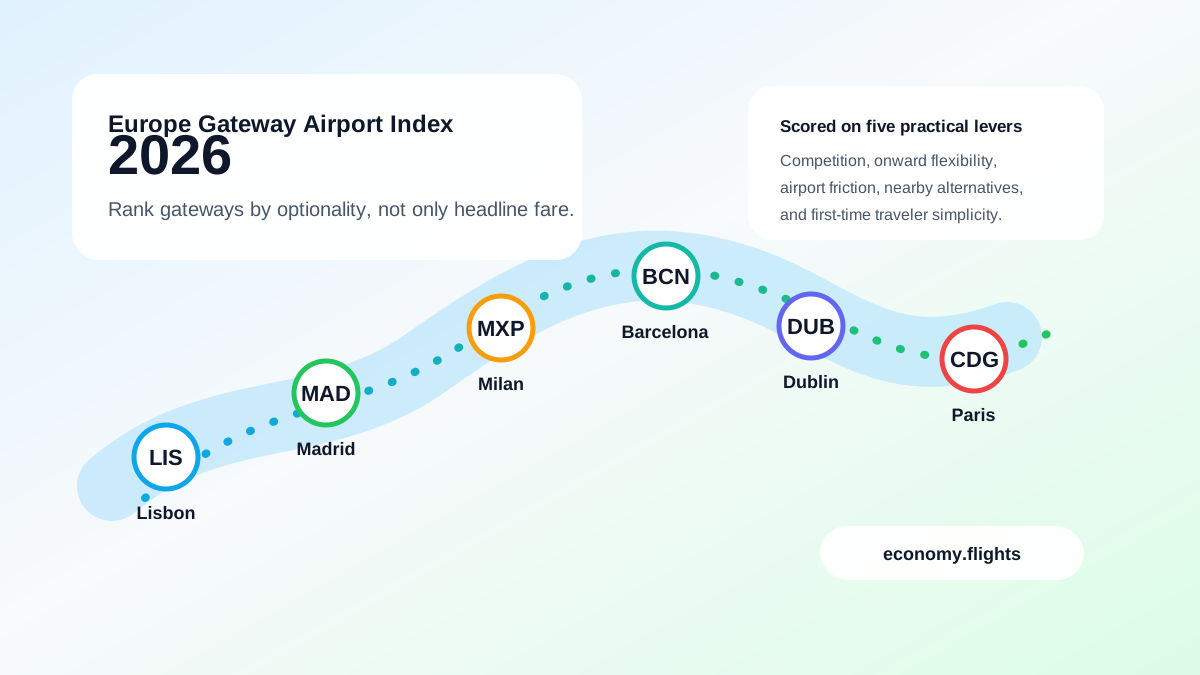
Low-cost route network graphic showing onward connections from major gateways.
Gateway cities that often make Europe easier to afford
Lisbon
Lisbon is a strong gateway because it combines broad international demand with appeal as a destination in its own right. Travelers can land there, enjoy Portugal immediately, or continue onward through strong Iberian connections.
It is particularly useful for travelers open to Portugal, southern Spain, or Atlantic-facing summer routes. Even when Lisbon is not the absolute cheapest fare on your search, it often creates a better total-trip balance than a smaller final airport.
Madrid
Madrid frequently works well because it is a major European hub with plenty of onward options. If your original target is a coastal city or a smaller Mediterranean airport, Madrid can be the cheaper and more forgiving entry point.
It also gives you choices once you land. You can stay, continue by budget flight, or use high-speed rail to reach other Spanish cities without rebuilding the entire itinerary around one expensive direct arrival.
Dublin
Dublin is a classic gateway for travelers who want a competitive long-haul entry with strong onward low-cost networks. It can work especially well for travelers who are still deciding where in Europe to spend most of the trip.
The real advantage is flexibility. A fare into Dublin can open Ireland itself, but it can also become the first stop before an inexpensive onward hop to continental Europe.

Destination graphic showing how gateways connect to stylish secondary cities.
Milan
Milan is one of the most practical entries for Italy and beyond because it combines major-airport scale with useful short-haul options. For travelers whose hearts are set on smaller Italian destinations, Milan can be the affordable way in.
It is also strong for multi-city trips. Land in Milan, spend time in northern Italy, then continue by rail or short flight instead of forcing a direct long-haul arrival to a smaller airport.
Paris
Paris is not “cheap” in the everyday sense, but as a flight gateway it often deserves a look because of its scale and connectivity. Competition can create solid long-haul pricing, and the city itself is a natural first stop if you want to balance one big destination with cheaper follow-on cities.
The trick is to be disciplined about what happens after arrival. If Paris is your entry point, do not let expensive local decisions undo the benefit of a strong long-haul fare.
Barcelona
Barcelona is a useful reminder that a gateway can also be a destination with broad appeal. If the fare is competitive, you get a city that justifies a stay and strong onward travel through Spain and the Mediterranean.
It works especially well for travelers comparing Spain with southern France, Portugal, or island options. Even if Barcelona is not your final stop, it can be a better-value start than a smaller airport with fewer flights and higher prices.
How to choose the right gateway for your trip
The cheapest city on the screen is only the right choice if it fits your onward route. Price the long-haul fare, the connection or train afterward, and the airport transfer on arrival. The best gateway is the one that lowers the total cost without turning day one into a transit marathon.
This is especially helpful for Europe summer travel. A cheaper arrival into Madrid or Lisbon can make a stylish secondary city more affordable than flying directly to a smaller tourist hotspot.
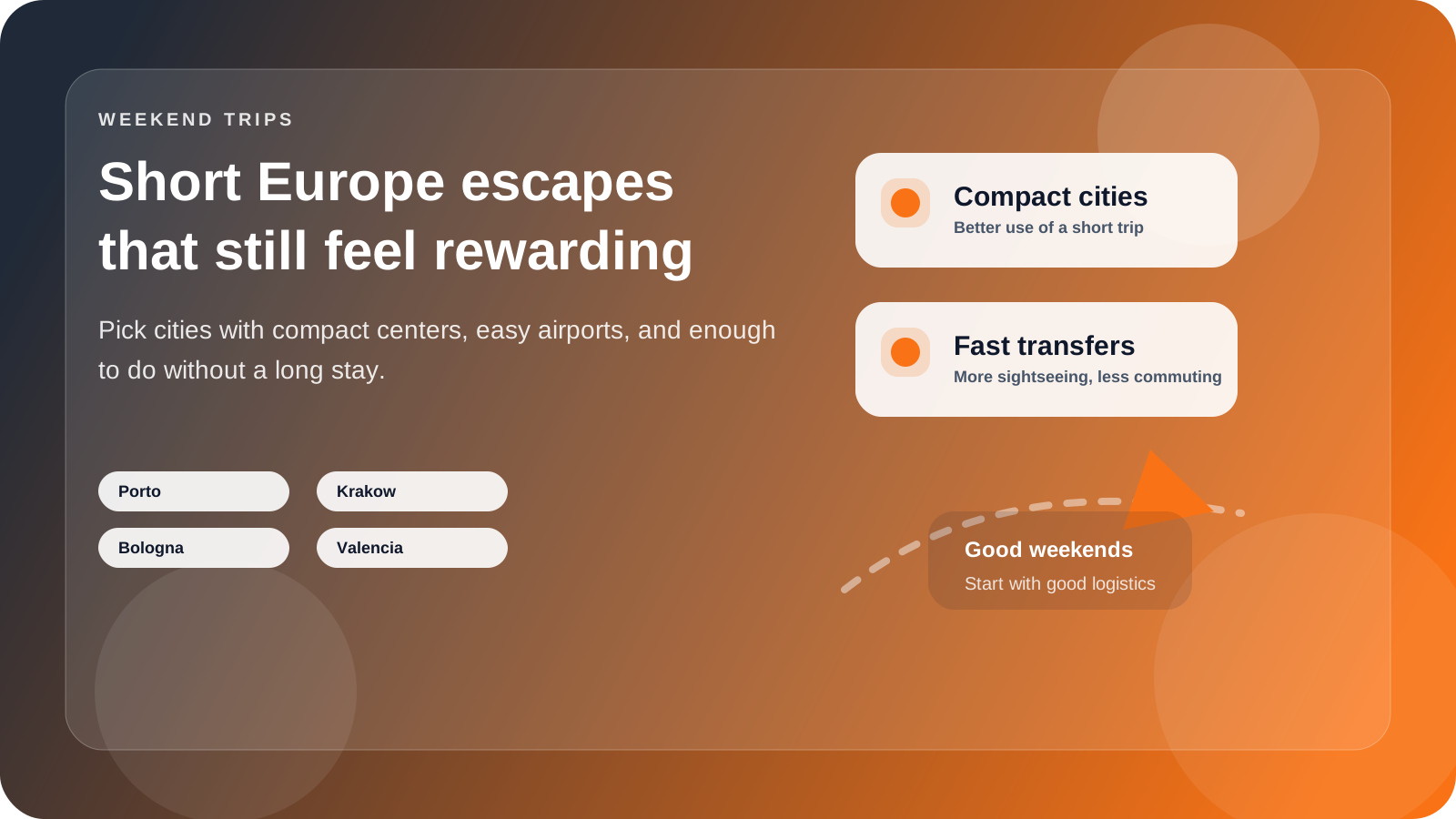
City-break image focused on compact trips built from cheaper Europe gateways.
Use gateway logic to widen your travel options
A gateway city gives you leverage. It lets you stay open longer, compare a few different second legs, and book the rest of the trip with better context. That flexibility is a real budget advantage because it stops you from overcommitting too early.
Think of gateways as doors, not detours. The best ones make the trip easier as well as cheaper.
- Price at least three gateway cities before choosing a Europe route.
- Check onward flights, trains, and transfer time before booking.
- Treat the gateway as a possible stop, not just a layover point.
- Use flexible dates to see which city has the best overall fare pattern.
What this looks like on a real Europe trip
Imagine a traveler who wants ten days in Europe, warm weather, and cities that still feel rewarding on a moderate budget. Instead of forcing a pricey direct arrival into a smaller tourist hotspot, they land in Lisbon, spend a few days there, and continue to Porto or Valencia. The trip ends up cheaper not because one line item was dramatically discounted, but because the route itself became smarter.
That is the big budget-Europe lesson. Good gateway logic, compact cities, and realistic transport choices usually create more savings than obsessive comparison of one ticket in isolation.
Mistakes that quietly inflate a Europe budget
Europe trips often become expensive through accumulation rather than one big mistake. Too many city changes, awkward arrival airports, and overly ambitious wish lists create more transport cost and more wasted half-days than travelers expect.
Another common problem is choosing cities for reputation alone. A better-value neighbor with easier logistics can produce a much richer trip if you are actually trying to enjoy the place instead of simply claiming it on an itinerary.
- Packing too many expensive cities into one short trip.
- Choosing a final destination before checking gateway options.
- Underestimating transfer costs and lost transit time.
- Forgetting that food, accommodation, and local transport matter as much as airfare.
A simple plan for turning ideas into a lower-cost itinerary
Good Europe planning usually starts with a region, not a random list of famous places. Once you choose the region, compare gateway cities, shortlist two or three strong-value destinations, and let the transport logic shape the rest.
That process gives you a trip that feels coherent and much easier to price. The route itself becomes part of the budget strategy rather than something you repair after booking.
- Pick a region first.
- Compare several gateways before you choose the long-haul flight.
- Favor compact cities and manageable travel days.
- Spend on the parts of the trip that create the most actual enjoyment.
Questions to ask before you lock the itinerary
The best Europe itineraries are usually the ones that still make sense after you strip away excitement and look at logistics. Can you move between the cities easily? Are you spending more time enjoying the place than changing hotels? Does the gateway choice still help once local costs are added in?
Those questions are what keep a budget trip from turning into a constant series of small compromises. They help you choose a route that stays enjoyable even after the novelty of planning wears off.
- Is this city sequence simple enough to enjoy without rushing?
- Could one less stop make the trip cheaper and better?
- Am I choosing this destination because it fits, or only because it is famous?
- Will the daily costs stay comfortable once I arrive?
Related reading
-
Turn gateways into an itinerary with How to Travel Europe on a Budget.
-
Use Best Budget Airlines in Europe for the onward short-haul leg if needed.
-
If you are planning warm-weather travel, see Cheap Summer Destinations in Europe That Feel Expensive.
FAQ
Why do some European cities price better than others?
Large gateways usually have more competition, more nonstop routes, and more onward connections, which often creates better pricing than smaller destination airports.
Should I always fly into the cheapest city available?
Only if the onward journey still makes sense. The best gateway is the one that lowers the full trip cost without adding too much transfer time or complexity.
Is it worth building a trip around a gateway city itself?
Often yes. Cities like Lisbon, Madrid, and Milan are not just transit points. They can be great value destinations or first stops in a larger Europe itinerary.
The cheapest cities to fly into Europe are valuable because they create options. Start with the strongest gateway, then build the rest of the trip around the routes and cities that make the whole journey work better.
Related routes and guides
Use this advice on a real route
Use the guide as a decision filter: compare the base fare, bags, seat choice, airport access, and travel time before calling a ticket cheap.
Route guide
Lisbon to Dublin
Use this route page to compare airport fit, baggage costs, timing, and the prefilled search for LIS to DUB.
Route guide
Lisbon to Madrid
Use this route page to compare airport fit, baggage costs, timing, and the prefilled search for LIS to MAD.
Route guide
Lisbon to Milan
Use this route page to compare airport fit, baggage costs, timing, and the prefilled search for LIS to MXP.
Destination guide
Dublin
Check the arrival-airport context, route links, and destination fit before treating the lowest fare as the best value.